

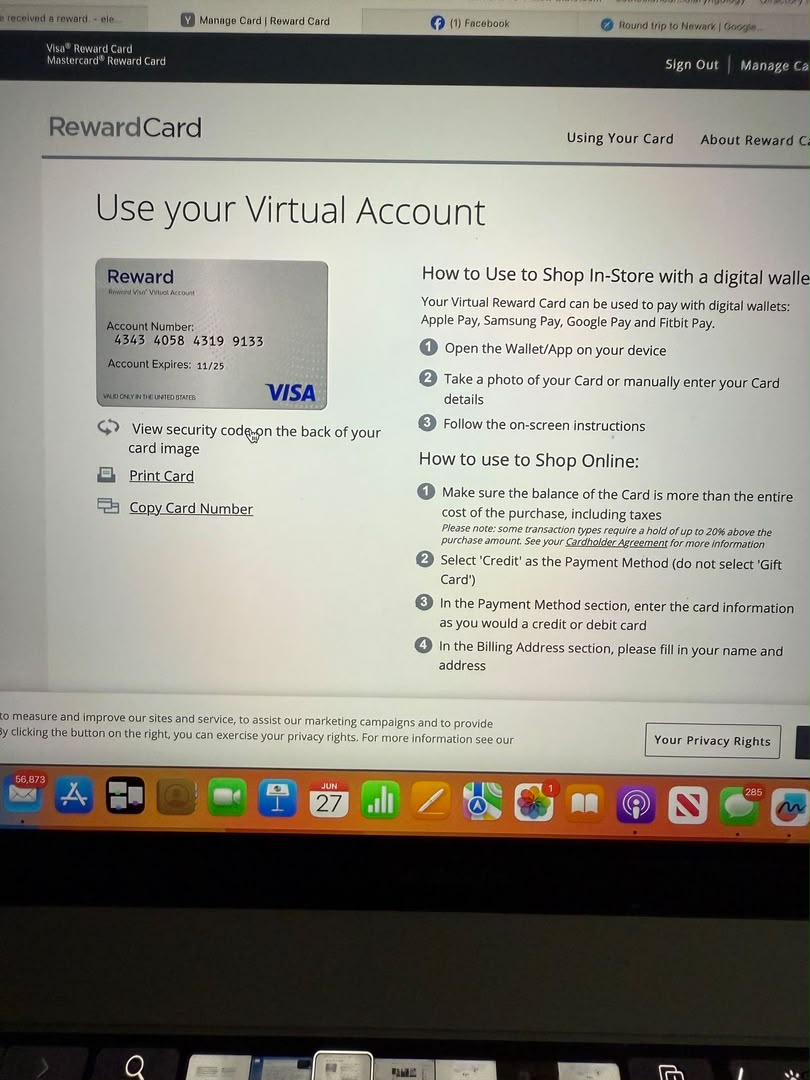
Buy Virtual Cards Online
Price range: $220.00 through $10,000.00
Buy Virtual Cards Online are digitally issued payment instruments that exist only online. They function like debit or credit cards but are safer, disposable, and globally accessible. Buying them online is not just convenient—it is a strategic financial decision in today’s digital economy.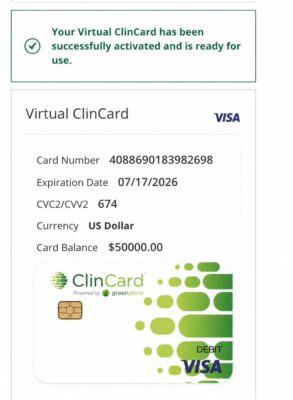
Buy Virtual Cards Online
Buy Virtual Cards Online are digitally issued payment instruments that exist only online. They function like debit or credit cards but are safer, disposable, and globally accessible. Buying them online is not just convenient—it is a strategic financial decision in today’s digital economy.
Buy Virtual Cards Online Economic Importance
The economic significance of buying virtual cards online extends far beyond convenience. It touches global trade, investment strategies, digital economy growth, and small business empowerment. Let’s expand each dimension in detail:
1. Global Trade Facilitation
Virtual cards act as bridges in international commerce, enabling businesses to transact across borders without the friction of traditional banking delays.
- Instant settlements: Payments clear faster than wire transfers.
- Reduced costs: Lower transaction fees compared to SWIFT or bank drafts.
- Currency flexibility: Many providers allow multi‑currency virtual cards, easing trade between regions.
- Example: A textile exporter in India can pay a supplier in Europe instantly with a virtual card, avoiding delays that could disrupt supply chains.
Keywords: global trade virtual cards, cross‑border payments.
💹 2. Investment Diversification
Virtual cards are increasingly used by investors to hedge against fraud and volatility in financial markets.
- Secure brokerage payments: Investors fund accounts without exposing their main bank details.
- Crypto exchanges: Many platforms accept virtual cards for fiat deposits.
- Portfolio diversification: Safer access to international investment opportunities.
- Example: An investor in Africa can buy shares on a U.S. exchange using a virtual card, bypassing restrictions of local banks.
Keywords: investment virtual cards, forex payments.
🛒 3. Digital Economy Growth
The subscription economy, gig platforms, and e‑commerce thrive on virtual card adoption.
- SaaS payments: Businesses use virtual cards for recurring software subscriptions.
- Gig economy: Freelancers receive secure payouts or pay for tools.
- E‑commerce expansion: Shoppers worldwide use virtual cards for safer online purchases.
- Example: A freelancer on Fiverr uses a virtual card to pay for design software monthly, ensuring predictable budgeting.
Keywords: digital economy virtual cards, virtual cards for subscriptions.
👩💼 4. Small Business Empowerment
Virtual cards level the playing field for entrepreneurs and SMEs.
- Access to suppliers: Small businesses can transact globally without needing corporate credit lines.
- Expense management: Owners issue virtual cards to employees with spending limits.
- Cash flow control: Prepaid virtual cards prevent overspending.
- Example: A startup in Kenya issues virtual cards to its team for travel expenses, each capped at a set budget.
📊 Why This Matters Economically
- Efficiency: Faster, cheaper transactions boost productivity.
- Security: Fraud protection reduces economic losses.
- Inclusion: Expands access to financial tools for underserved populations.
- Growth: Fuels e‑commerce, fintech, and global trade ecosystems.
🔐 Security & Fraud Prevention
- Masked card numbers: Protects real account details from exposure.
- Disposable cards: One‑time use prevents hackers from reusing stolen data.
- Two‑factor authentication: Adds an extra layer of protection.
- Regulated providers: Ensure compliance with banking laws and consumer protection standards.
🌐 Accessibility & Inclusion
- Unbanked populations: Virtual cards provide access to digital payments for those without traditional bank accounts.
- International students: Simplifies tuition payments and subscription services abroad.
- Remote workers: Enables international salary transfers securely.
- Travelers: Safer than carrying cash or exposing physical cards abroad.
⚖️ Comparison – Virtual vs Physical Cards
When evaluating virtual cards against physical cards, the differences go beyond convenience. Each option carries unique strengths and limitations that affect security, accessibility, and usability.
🔐 Security
- Virtual cards: Offer disposable numbers and masked details, making them highly resistant to fraud.
- Physical cards: Vulnerable to theft, skimming, and cloning, though chip technology has improved security.
⏱️ Convenience
- Virtual cards: Issued instantly online, usable immediately for digital transactions.
- Physical cards: Require physical delivery, which can take days or weeks.
💳 Control
- Virtual cards: Easy to cancel, limit, or generate new numbers for specific purchases.
- Physical cards: Harder to manage subscriptions or recurring charges without replacing the card.
🌐 Acceptance
- Virtual cards: Limited in some cases (e.g., offline merchants, ATMs).
- Physical cards: Universally accepted across online and offline channels.
📊 Unique Advantage
- Virtual cards: Fraud protection, budget control, and instant issuance.
- Physical cards: Recognized everywhere, including offline transactions.
|
Virtual CardInstant issuance
|
Physical CardUniversal acceptance
|
|
| Security | ||
| Fraud Risk | Low – disposable numbers | Higher – theft/skimming |
| Masked Details | Yes | No |
| Convenience | ||
| Issuance | Instant online | Days/weeks delivery |
| Usage | Digital only | Digital + offline |
| Control | ||
| Cancellation | Easy, instant | Requires replacement |
| Subscription Mgmt | High – disposable numbers | Low – tied to card |
| Acceptance | ||
| Offline Use | Limited | Universal |
| ATM Access | No | Yes |
| Unique Advantage | Fraud protection + budget control | Offline universal recognition |
The comparison shows that virtual cards excel in security, control, and digital convenience, while physical cards remain essential for offline acceptance and universal recognition. For most users, the best strategy is a hybrid approach: using virtual cards for online transactions and physical cards for everyday offline purchases.
The importance of buying virtual cards online lies in their ability to transform financial security, accessibility, and convenience. They empower individuals, businesses, and institutions to participate in the digital economy without fear of fraud or exclusion.
By offering instant issuance, disposable numbers, and global reach, virtual cards are not just a payment method—they are a strategic financial tool for the modern era. As fintech adoption accelerates, their role will expand further, making them indispensable for e‑commerce, travel, investment, and global trade.
📌 Conclusion:
The rise of virtual cards marks a turning point in how individuals and businesses interact with the global financial system. Unlike traditional payment methods, they combine security, accessibility, and flexibility in ways that directly support the digital economy.
- Economic Growth: Virtual cards fuel global trade, empower small businesses, and support the subscription economy.
- Security: With disposable numbers and fraud protection, they reduce risks that cost billions annually.
- Inclusion: They open financial access to unbanked populations, international students, and remote workers.
- Convenience: Instant issuance and digital wallet integration make them indispensable for modern lifestyles.
Ultimately, buying virtual cards online is not just about convenience—it is about reshaping financial participation in a world where digital transactions dominate. They are tools of empowerment, enabling safer commerce, smarter budgeting, and broader inclusion.
As fintech adoption accelerates, virtual cards will continue to evolve, integrating with blockchain, AI‑driven fraud detection, and global payment ecosystems. Their importance will only grow, making them a cornerstone of secure, inclusive, and efficient financial systems worldwide.
| quantity | 3000, 7000, 10000, 15000, 20000, 300000, 500000 |
|---|
Be the first to review “Buy Virtual Cards Online”
Related products
Buy Virtual Cards Online
Reviews
There are no reviews yet.